
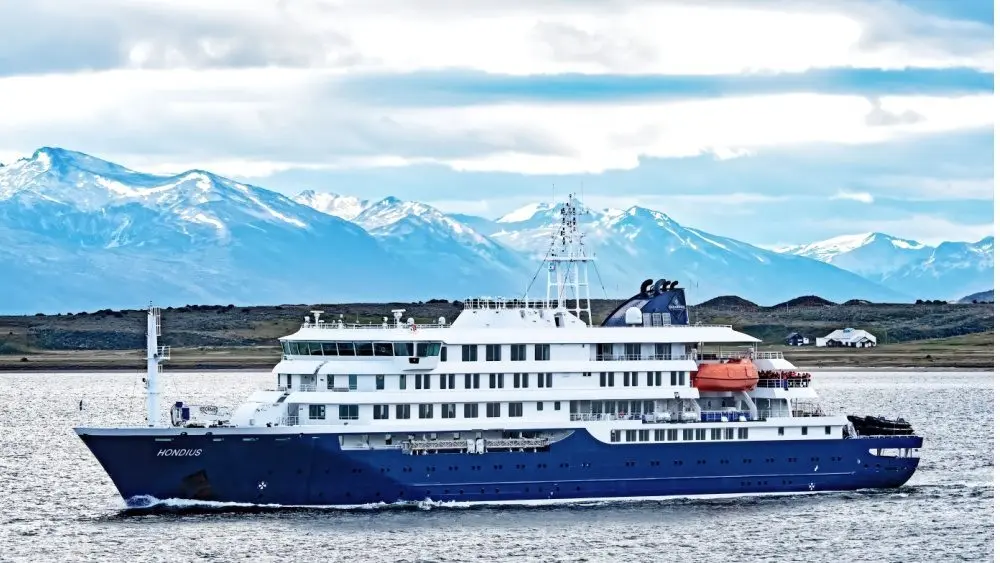
A large-scale medical response is underway after passengers aboard the expedition cruise ship MV Hondius were exposed to the Andes strain of hantavirus, a rare and potentially deadly virus linked to an outbreak during the vessel’s South American voyage.
The evacuation effort concluded Monday in Tenerife, Spain, where the final passengers and several crew members safely left the ship after strong winds briefly delayed disembarkation. Those remaining onboard began the ship’s final journey to Rotterdam, Netherlands, where the vessel will undergo deep cleaning and disinfection with a reduced crew.
Among those evacuated were 18 people transported to the United States for monitoring and treatment. Sixteen are being cared for at the Nebraska Medical Center in Omaha, while two others — a couple transferred to Emory University Hospital in Atlanta — are being treated in specialized biocontainment units after one developed symptoms. The Department of Health and Human Services said one patient in Nebraska has tested ‘mildly positive’ for the virus and is under close observation, while the remaining passengers continue in quarantine as health teams conduct medical evaluations.
The Centers for Disease Control and Prevention (CDC) said some individuals may eventually complete the recommended 42-day monitoring period at home if they remain symptom-free and can safely isolate while staying in contact with health authorities. “First and foremost, do they remain symptom free,” CDC official Dr. Brendan Jackson said while explaining how decisions on release from quarantine will be made. Health officials emphasized that each case will be assessed individually, taking into account access to testing, medical care and local public health oversight.
The outbreak has so far been linked to six confirmed cases and two probable infections, including two deaths. The voyage began April 1 in Ushuaia, Argentina, but the outbreak was not formally identified until May 2, weeks after the first passenger became ill and later died. Before reaching Spain’s Canary Islands, the ship had previously stopped near Cape Verde, where several infected or symptomatic passengers were removed by emergency evacuation flights. Passengers and crew from nearly two dozen countries were ultimately repatriated through a coordinated international operation involving local authorities, the World Health Organization and multiple governments.
Officials in New York confirmed that three state residents — from New York City, Orange County and Westchester County — are among those currently being monitored in Nebraska. Gov. Kathy Hochul said state agencies are preparing for any possible developments, though she stressed there is currently no immediate threat to the public “At this point, it is important to emphasize that there is no immediate risk to the public,” State Health Commissioner Dr. James McDonald said.
The situation has drawn increased attention because the virus involved is the Andes strain of hantavirus, a rare variant primarily found in South America. Unlike most hantaviruses, which typically spread from rodents to humans, the Andes strain is the only known version capable of person-to-person transmission. “The Andes strain has been increasing recently as rodents migrate north toward Buenos Aires in hot, wet climate conditions,” Dr. Marc Siegel said. “It is predominately a rodent virus – current sequencing shows no mutations so far.”
Editorial credit: Mystic Stock Photography / Shutterstock.com